Fire wardens seldom get headlines, yet they lug the responsibility that establishes whether an emergency finishes with an orderly evacuation or an avoidable catastrophe. The across the country recognised unit PUAFER005 Operate as part of an emergency control organisation sits at the heart of that capability. It builds practical abilities for wardens in work environments of every kind, from health centers and mall to storehouses and high-rises. If you pair it with PUAFER006 Lead an emergency control organisation, you cover both the warden and chief warden collections of duties, which is often what large facilities need to satisfy their fire warden requirements in the workplace.
What follows is a practitioner's break down of the PUAFER005 course, exactly how competent training carriers run it, what the analyses resemble, and how it dovetails with relevant training like the chief warden course. I will also deal with usual questions, including fire warden training requirements and also the useful matter of fire warden hat colour and what colour helmet a chief warden wears on site.
Where PUAFER005 Fits in the Emergency Situation Control Picture
Emergency Control Organisations, or ECOs, exist to ensure that a work environment can react to fire, harmful spills, protection risks, medical emergencies, and building systems failings without shedding priceless time. The ECO framework, laid out in fire warden training courses Australian Standards such as AS 3745 for centers and AS 4083 for healthcare, assigns specific duties to individuals during an event. PUAFER005 trains personnel to operate as wardens inside that structure. They are the ones examining zones, sweeping floorings, interacting with the chief warden, and directing owners to setting up areas.
In a normal building, an ECO includes a chief warden, deputy principal, interactions policeman, flooring or area wardens, and wardens. PUAFER005 covers the warden and location warden features. PUAFER006 Lead an emergency control organisation covers the leadership duties, consisting of chief warden responsibilities such as making the call to leave, communicating with emergency solutions, and coordinating the total response.
You will see the device names composed in several means on sales brochures: puafer005 course, puafer005 operate as part of an emergency control organisation, emergency warden course, or simply warden training. They describe the same proficiency unit. Whether you call it a fire warden course or an emergency warden course, the abilities revolve around one concept: take control of an unpleasant scenario and keep people safe.
Learning Results You Need to Expect
Good fire warden training does not drown students theoretically. It develops the muscle mass memory and judgment to act. PUAFER005 learning outcomes gather around five domain names that mirror what occurs during an emergency:
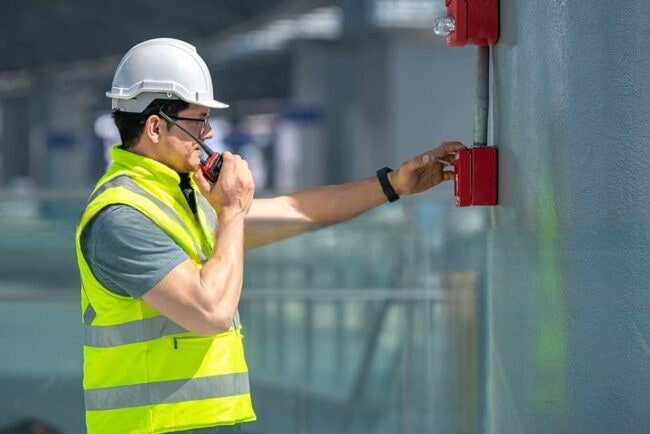
Understanding the center and the ECO. Learners ought to have the ability to explain the ECO framework for their site, including who does what, just how to rise decisions, and how to incorporate specialists or visitors. They must acknowledge alarm systems and warning tones and interpret emergency strategies, area layouts, staircase pressurisation systems, and evacuation paths. When the air is smoky and the lights are dim, you do not want to read the prepare for the initial time.
Hazard acknowledgment and very early response. Wardens learn to determine most likely emergency situation scenarios for the website, not just fire. In a food factory, ammonia leaks may rank greater than open flames; in an office tower, smoke movement between floors can be the concealed threat. PUAFER005 covers initial action procedures such as including little fires with the appropriate extinguisher, separating energy resources when secure, and shutting doors to avoid smoke spread. The program likewise makes clear when to stop being an initial responder and come to be an evacuator.
Communication and decision making. Emergencies hardly ever unravel neatly. Elevators stop, a warden goes missing out on, the intercom falls short, or somebody collapses on the staircases. Wardens must interact plainly with the chief warden, relay condition updates, and make decisions that fit the strategy but adjust to truth. Voice, tone, and brevity issue. Numerous trainees are surprised just how tough it is to offer a succinct floor move record while alarm systems are sounding.
Evacuation leadership and resident management. Moving people is a craft. Wardens find out to direct crowds, take care of choke points, assist mobility-impaired passengers, and deal with those who will not abide. They additionally discover to prioritise tasks such as checking rooms, isolating risks, and managing doors. In layered evacuations, they might keep specific locations in place while removing others. The nuance below matters. Getting a full structure evacuation throughout a had cooking area fire may subject individuals to unnecessary threat in the stairwells.
Post-incident actions. Cleaning the last area is not completion. PUAFER005 includes responsibilities after the occasion: roll calls at assembly locations, standing records to the chief warden or emergency situation solutions, seclusions to prevent re-ignition, and exact incident documentation. Great records conserve arguments with insurers and regulators later.
I have seen these end results play out throughout genuine emptyings. One storehouse team had exercised their sweep pattern so completely that they cleared a 12,000 square metre location in under four minutes while still representing a forklift operator with a sprained ankle joint. An additional team, educated to stop and really feel doors for warm, stayed clear of opening a door right into a warm, great smoky workplace that would certainly have attracted fire into their hallway. The difference is not good luck; it is trained habit.
The Framework of a Strong PUAFER005 Course
While providers vary, the composition of a strong puafer005 course is consistent. Expect a mix of short, concentrated theory with scenario-driven method in your actual facility or a well-simulated environment. The majority of programs run in between 3 and 6 hours depending on the website's complexity and whether participants hold previous warden training.
The class segment sets the baseline. Instructors cover ECO duties, alarm, usual emergency situation types, choice procedures, and human aspects. Great trainers do not miss the psychology. Individuals ice up, worry, or over-help. The course must explain exactly how to break a person out of a freeze, exactly how to stop a potential hero from re-entering a structure, and just how to offer instructions that stick.
Hands-on parts make the difference. Also a short practical session with fire extinguishers in a regulated environment modifications practices. People discover that CO2 extinguishers plume chilly fog and lack a stress gauge, that dry chemical powder will certainly obscure presence and develop collateral clean-up, which focusing on the base of the fire is not instinctive for a first-timer. If your site has fire indicator panels, wardens must see them, listen to the tones, and exercise a floor-by-floor sweep under time pressure.
Communication drills are non-negotiable. Practise delivering a 10-second upgrade on a radio: area, condition, activity, need. For instance, "Degree 8 eastern wing clear, smoke in printer area consisted of, doors shut, proceeding to west wing, no support called for." It appears simple in a peaceful area, much less so when alarm systems are blaring.
Finally, site customisation matters. A medical facility emergency warden encounters different choices than a retail warden. In health care, you may rely on straight discharges and defend-in-place approaches prior to moving individuals. In retail, the concerns include isolating back-of-house corridors and assisting the public that have never seen your strategy. The training course needs to mirror the building's layout, occupant account, and threat register.
Assessment: What Proficiency Looks Like in Practice
Assessment for PUAFER005 is competency-based, not a memory test. You demonstrate that you can operate as component of an emergency control organisation against clear standards. Assessors usage monitoring, useful situations, and brief knowledge checks. You can anticipate three kinds of proof:
Observed efficiency in simulated emergency situations. Assessors view just how you analyze alarm systems, record to the chief warden, perform area sweeps, usage equipment securely, and handle passengers. They note whether you check rooms systematically, close doors, avoid elevators, and maintain interaction technique. They additionally watch your judgment. It is not enough to stroll a corridor; you require to ensure choices quickly.
Short created or dental inquiries. These confirm understanding of the ECO structure, escalation paths, alarm system tones, and standard lawful obligations. Concerns may ask when to utilize an extinguisher versus when to leave, how to sustain mobility-impaired residents, and how to handle a missing individual report.
Workplace documents and involvement records. Where feasible, service providers connect training to your actual Emergency Action Strategy. You may be asked to review or annotate a layout, sign on for drill involvement, or finish a warden list made use of in real occurrences. Documents shows you can translate abilities to your site.
Under analysis problems, I look for clearness in interaction and uniformity in sweeping patterns. If a participant modifications their sweep order mid-evacuation, they take the chance of going across an additional warden's course and missing out on a storage place. I also view just how wardens deal with tiny problems. A shut fire door is not a dead end; it is an indication to readjust your path and report the change.
Fire Warden Training Requirements and Frequency
Fire warden training requirements are driven by danger and by requirements, rather than a hard-and-fast law that fits every building. Many organisations educate brand-new wardens when selected and rejuvenate at the very least annually. Risky sites train more often or run quarterly drills to strengthen practices. Regulators and insurance companies anticipate to see evidence of training, drills, and discovering captured in updates to the Emergency Feedback Plan.
Chief warden training rests on top. If your center expects someone to take command, communicate with emergency situation solutions, and take care of a complicated discharge, PUAFER006 Lead an emergency control organisation is the appropriate unit. Lots of providers offer a combined day that covers both the PUAFER005 course and the PUAFER006 course for groups that consist of wardens and principals. This consolidated strategy streamlines drill control and strengthens the hand-offs in between roles.
One caution: advertise on capability, not title. A tranquil flooring warden that connects crisply may be a better chief emergency warden than an elderly supervisor that struggles to make decisions under tension. The most effective chief warden training builds the calmness and structure to make a decision, connect, and adapt. The chief fire warden course likewise checks out chief warden responsibilities like taking care of partial evacuations, coordinating with structure services like cooling and heating closures, and hosting evacuees to decrease stairwell congestion.
Equipment, Identification, and the Colour Question
A remarkably common concern turns up throughout warden training: what colour helmet does a chief warden wear? Australian method, affected by AS 3745 guidance and widespread convention, uses colour to distinguish duties throughout a feedback. While specific colours can differ by organisation, the common convention runs similar to this: chief warden in white, flooring or location wardens in yellow or red, and interactions officers in a distinct colour such as white with markings or green. In many offices you will see hats or vests as opposed to tough safety helmets. The idea is rapid identification, not fashion.
Fire warden hat colour should be consistent on a site and reflected in the strategy. I have actually gone to drills where 2 groups showed up in red vests identified WARDEN and an additional team got here in yellow without labels. Occupants had no idea whom to adhere to. Tags, reflective strips, and clear message issue in smoke or low-light problems. Spare vests stored at the panel or in well-known cabinets are an affordable, high-impact upgrade that pays off when a warden forgets theirs.
Beyond headwear, equipment for wardens typically includes a whistle, a lantern, a small emergency treatment pack, and a radio if released. Keep it easy. Excessive equipment slows movement and distracts from the job. In loud plant rooms, a hand signal procedure defeats yelling. Practice those signals during drills.
Human Aspects That Make or Damage a Response
If you have ever cleared a jampacked stairwell, you know treatments just presume. Individuals act unexpectedly under tension. The even more your emergency warden training addresses human factors, the smoother your discharge will go.
Complacency is the first enemy. Occupants that have actually endured lots of routine alarm systems will certainly delay in entrances, stray back to their workdesks, or choose they have time to order a coffee. Wardens need to project authority without screaming. Short, instruction expressions job: "Leave now, take the staircases, follow me." Prevent arguments. If a person insists on ending up a phone call, setting yourself so the crowd maintains flowing around them and involve security after the event.
Accessibility needs preparation. Mobility-impaired occupants may require assistance to get to secure refuge factors. Do not improvise this on the day. Assign buddies, validate haven areas, and practice transfers. In buildings with emptying chairs, just qualified staff should run them, and you should practice on an actual stairwell. If your website does not have these, develop a defend-in-place plan and collaborate with firefighters on access points.
Noise, warm, and smoke erode judgment. During an actual smoke event in an office tower, one group discovered that the lovely wayfinding signage went away into a haze. The wardens' head torches and loud, basic commands carried the day. They likewise discovered that propping doors for benefit had permitted smoke to spread much faster. Later, the chief warden upgraded their procedures to emphasise closing doors and checking stairwell pressure.
Visitors and service providers make complex counts. A clean roll telephone call relies on accurate sign-in and sign-out systems. If your site makes use of numerous entrance factors or enables temporary contractors, create a solitary point of fact for headcounts, ideally easily accessible to the chief fire warden group at the assembly area. Modern technology helps, but just if wardens recognize who holds the gadget and how to make use of it.
Drills That Teach Rather Than Tick Boxes
The worth of emergency warden training turns up during drills. Sadly, lots of drills are scripted to the factor of impracticality. You obtain much more by introducing moderate uncertainty than by running best choreography every time.
Rotate scenarios. One quarter, cause an alarm on a silent floor and test communication. Next, phase an obstructed stairwell and enjoy how wardens reroute people. Afterward, replicate a person refusing to evacuate or a clinical emergency situation mid-evacuation. Debrief instantly and document lessons discovered. Over a year, purpose to work out all components of the plan, including partial discharges, after-hours feedback, and interaction failures.
Mix teams. Do not permit the very same three wardens to carry every drill. People take vacations and transform work. Cross-train so each warden can cover surrounding areas. Welcome the chief warden and interactions officer to switch duties in one drill so they value each various other's restraints. That experience pays off when the panel decreases and you move to portable radios and runners.
Coordinate with centers administration. A drill is a chance to examine mechanical systems. Validate that dampers close as designed, fire doors shut and latch, and the public address system reaches all zones. The chief fire warden duties include comprehensive warden training feeding these searchings for back to centers so they can readjust upkeep timetables and correct faults.
How PUAFER005 and PUAFER006 Complement Each Other
Many organisations ask whether every warden needs to do both PUAFER005 and PUAFER006. The short response is no. Train individuals for the duty they will play. If you have a deep bench and desire succession capability, select a subset of wardens for the chief warden course. Those people will certainly understand the bigger photo: danger evaluation, partial evacuation methods, inter-agency interaction, and post-incident leadership.
That stated, combining the systems in a single training day for combined friends can be effective. Wardens see just how their records feed the principal's choices. Chiefs see the barriers wardens deal with in hallways and stairwells. Joint drills then enhance the chain of interaction. In my experience, sites that educate both degrees together at least once a year recover faster from curveballs, such as an alarm system throughout a power outage or a double occasion like a fire and a lift entrapment.
Evidence and Compliance Without the Paper Mountain
A useful note on conformity. Fire warden requirements in the workplace consist of demonstrating that you have an ECO, training, and a plan, not hiding on your own in documentation. Maintain records lean and helpful:
- A current Emergency Action Plan with marked evacuation paths, refuge points, and assembly areas, aligned with your building's systems. A register of wardens, primary wardens, and replacements with PUAFER005 and PUAFER006 training days and refreshers. Drill routines, brief situations, presence, timed end results, and a one-page debrief with activities and owners. Equipment check logs for radios, emptying chairs, and warden kits. A post-incident declare any genuine occasion, capturing timelines, choices, and corrective actions.
These five items please most auditors and, a lot more importantly, help the ECO improve.
Choosing a Training Service provider That Educates, Not Just Ticks
Not all warden training is equivalent. When selecting a carrier for the fire warden course or the chief fire warden course, try to find indicators that they will certainly customise to your site. Ask whether they will certainly walk your floorings and adjust circumstances to your risks. Validate that they consist of practical radio drills, obstacle monitoring, and human aspects, not simply PowerPoint slides.
Check the reputation of the fitness instructor. Experience with genuine cases programs. A trainer who can inform you why a certain stairwell jammed during a drill or how a communication failure brought about a missed area will certainly stick in your group's memory. If you remain in a complex atmosphere like a health center or an industrial plant, ask for industry-specific instances. PUAFER005 and PUAFER006 set the framework. Lived experience delivers the learning.
Finally, make sure assessments are genuine. You desire your ECO to be skilled, not just certified. Service providers should evaluate under realistic problems, record monitorings, and give specific comments to individuals. That feedback is just how wardens grow from adequate to excellent.
Edge Cases You Should Plan For
Even complete training leaves voids if you have actually not considered edge cases. Spend a long time as an ECO planning for:
Stairwell blockage throughout a multi-tenant emptying. If your building houses several organizations, coordinate across tenant lines. Agree on staggered evacuation when possible and clarify who controls the staircase doors. Chief warden requirements consist of understanding base-building controls and negotiating those protocols.
After-hours cases. Wardens might not be present. Make a decision whether safety or task supervisors create a skeletal system ECO and how they access warden equipment. Think about on-call rosters for the chief emergency warden to supply phone advice up until emergency solutions arrive.
People that will not leave. Some individuals reject. Train wardens to stay clear of confrontation. Videotape the place, escalate to the chief warden, and pass information to emergency services. Never ever allow one noncompliant individual delay the circulation of evacuees.
Concurrent occasions. An emergency alarm may accompany a lift entrapment or a clinical emergency. Chiefs should prioritise. Life safety and security overtakes possession security. Usually that means delegating a warden to remain with the person while the remainder continue the discharge and paramedics are directed to the correct stairwell.
Neighbouring risks. In industrial estates, your emergency could start following door. Develop outside circumstances into your emergency warden training. Smoke blowing across your car park can create presence threats at your setting up location. Determine alternate setting up factors in your plan.
What Success Appears like When It Counts
An effective ECO really feels virtually uninteresting from the outside. Individuals file out smoothly. Wardens check spaces, close doors, and report without difficulty. The chief warden obtains crisp updates and makes simple, timely choices. Firefighters get here to discover a structure that is clear, a panel that shows the appropriate area, and a principal with accurate information.
That level of smoothness is not accidental. It comes from normal, targeted training, from a PUAFER005 course that sharpened functional abilities, from a chief warden training session that built command presence, and from drills that instructed instead of humiliated. It additionally comes from small information, like clearly labelled vests, functioning torches in warden kits, and a plan that matches the reality of your building.
If you are setting up or rejuvenating your ECO, start with duties and people. Select wardens that recognize the floorings, connect well, and remain tranquil. Put them through PUAFER005. Select a principal that can make a decision and lead under pressure, then invest in PUAFER006. Shape drills around your threats, not a generic script. Maintain your documents tidy and helpful. And the next time an alarm system appears genuine, you will see the payoff in the means your people relocate and the self-confidence in your team's voices.
Quick Referral: Functions, Training, and Identification
For simplicity of preparation, below is a compact referral that lines up training, typical responsibilities, and recognition. Treat it as a starting point, after that customize to your site.
- Warden or floor warden: PUAFER005. Obligations include area moves, owner instructions, regional danger isolation when risk-free, and reporting to the chief. Recognition commonly a yellow or red vest or safety helmet marked WARDEN. Chief warden: PUAFER006. Duties include examining details, purchasing discharges, working with wardens, liaising with emergency services, and taking care of assembly locations. Recognition commonly a white vest or helmet marked primary WARDEN. Deputy chief warden: PUAFER006 suggested. Acts for the chief, handles certain areas, supports communications. Recognition similar to chief with replacement marking. Communications officer: PUAFER005 with site radio training. Handles the panel, logs occasions, passes on instructions. Recognition normally a distinct vest or significant white. First response group: Site-specific abilities in extinguishers and spill control, educated together with PUAFER005. Identification aligned with duty and plan.
Keep the concentrate on clearness and competence. Titles and colours assist just inasmuch as they make it much easier for people to follow instructions and for the ECO to work as a single unit.
Take your leadership in workplace safety to the next level with the nationally recognised PUAFER006 Chief Warden Training. Designed for Chief and Deputy Fire Wardens, this face-to-face 3-hour course teaches critical skills: coordinating evacuations, leading a warden team, making decisions under pressure, and liaising with emergency services. Course cost is generally AUD $130 per person for public sessions. Held in multiple locations including Brisbane CBD (Queen Street), North Hobart, Adelaide, and more across Queensland such as Gold Coast, Sunshine Coast, Toowoomba, Cairns, Ipswich, Logan, Chermside, etc.
If you’ve been appointed as a Chief or Deputy Fire Warden at your workplace, the PUAFER006 – Chief Warden Training is designed to give you the confidence and skills to take charge when it matters most. This nationally accredited course goes beyond the basics of emergency response, teaching you how to coordinate evacuations, lead and direct your warden team, make quick decisions under pressure, and effectively communicate with emergency services. Delivered face-to-face in just 3 hours, the training is practical, engaging, and focused on real-world workplace scenarios. You’ll walk away knowing exactly what to do when an emergency unfolds—and you’ll receive your certificate the same day you complete the course. With training available across Australia—including Brisbane CBD (Queen Street), North Hobart, Adelaide, Gold Coast, Sunshine Coast, Toowoomba, Cairns, Ipswich, Logan, Chermside and more—it’s easy to find a location near you. At just $130 per person, this course is an affordable way to make sure your workplace is compliant with safety requirements while also giving you peace of mind that you can step up and lead when it counts.